Is plastic surgery covered by OHIP in Ontario?
By Elena Moreau · Updated 2026-06-10
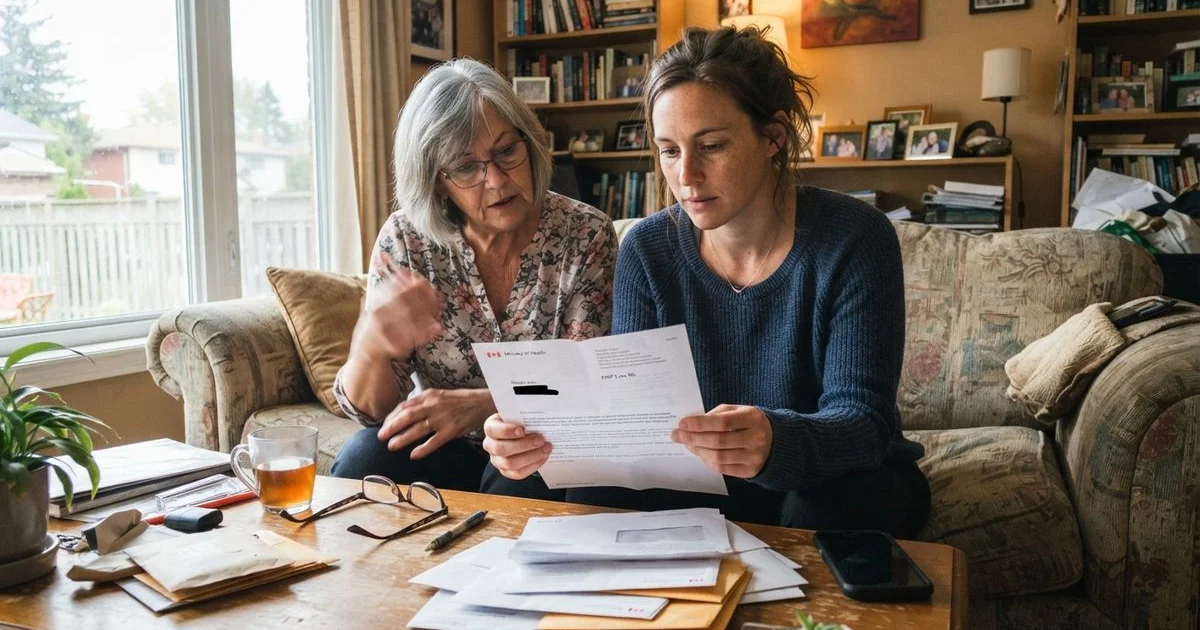
OHIP draws one hard line: does the surgery restore function, or does it change appearance. If it restores function, letting you see properly, relieving pain caused by excess tissue, or rebuilding what disease or injury removed, it can qualify for coverage. If the goal is purely how something looks, you pay out of pocket, even when the surgeon operates inside a hospital.
That line sounds clean on paper. In practice, several procedures sit right on the border, and the same operation gets approved for one patient and denied for another depending entirely on the medical documentation behind it.
What OHIP typically covers
| Procedure | Usually covered when | Usually not covered when |
|---|---|---|
| Breast reduction | Back or neck pain, skin breakdown, or nerve symptoms are documented | Requested to change size or shape alone |
| Upper eyelid surgery (blepharoplasty) | A visual field test confirms excess skin blocks your sightline | The concern is puffiness or cosmetic aging around the eyes |
| Panniculectomy | Hanging skin after major weight loss causes rashes, infection, or restricted movement | Combined with a cosmetic tummy tuck purely for shape |
| Breast reconstruction | Performed after mastectomy for cancer or a confirmed high-risk gene mutation | Reconstruction after mastectomy is consistently funded across Ontario |
| Reconstructive and hand surgery | Needed after trauma, burns, or a congenital condition | N/A |
| Gender-affirming surgery | Approved through Ontario’s referral and readiness-assessment process | The procedure requested falls outside the funded surgical list |
Breast augmentation, facelifts, cosmetic rhinoplasty, liposuction, cosmetic tummy tucks, and injectables like Botox or dermal fillers are not funded anywhere in the province. That holds true no matter which hospital or clinic performs the work. For a sense of what those procedures actually run once you are paying privately, the plastic surgery cost guide breaks down typical price ranges and what moves them.
How the approval process actually runs
Getting OHIP to pay for a procedure is a documentation exercise as much as a medical one.
- Your surgeon examines you and records the functional problem: pain, skin breakdown, restricted vision, restricted movement.
- Photos go into the file alongside the clinical notes.
- The surgeon’s office submits a prior-approval request to OHIP before any surgery is booked.
- You wait, typically a few weeks, for a decision. Some cases need a second round of documentation before approval comes through.
- If approved, the medically necessary portion is billed to OHIP. Any cosmetic add-on, a slightly tighter tummy tuck alongside an approved panniculectomy, for instance, gets billed to you separately.
When one surgery is part covered, part cosmetic
This is where most confusion happens. Say you qualify for a panniculectomy after significant weight loss. OHIP may cover the surgeon’s fee and hospital costs for removing the excess skin apron itself. If you also want the abdominal muscles tightened or the area sculpted for a flatter look, that portion is a private add-on, billed and consented to separately from the covered work. Ask your surgeon’s office to break down, in writing, exactly which line items OHIP is paying and which ones you are, before you sign anything.
The same split shows up in gender-affirming care: OHIP funds an approved list of procedures through its referral process, but any additional cosmetic refinement a patient wants beyond that list is out of pocket.
What to bring to your first conversation
Come prepared with specifics rather than a general complaint. “My bra straps leave grooves and I get headaches by mid-afternoon” gives a surgeon something concrete to document. “I don’t like how they look” does not support a funding request, however real the discomfort feels. If you already see a family doctor, a referral letter describing how long the problem has lasted and what you have tried (physiotherapy, different bras, wound care) strengthens the case considerably.
You can browse board-certified plastic surgeons across the province on the directory home page, then narrow down by procedure once you know whether you are pursuing a funded or a private pathway. Every surgeon profile is reviewed using the same scoring methodology, so you are comparing listings on consistent criteria rather than marketing copy.
This is general information about how OHIP funding decisions typically work, not medical advice or a guarantee of coverage. Only your surgeon and OHIP can confirm what applies to your specific situation.
Questions people ask
- Does OHIP cover breast reduction?
- Sometimes. If a surgeon documents that breast size is causing back or neck pain, skin irritation, or nerve symptoms, OHIP may approve a reduction as a functional procedure. A request based only on appearance is not covered.
- Is a tummy tuck ever covered by OHIP?
- Only the panniculectomy part: removal of a hanging skin apron after major weight loss, and only when a surgeon documents rashes, infections, or mobility problems it causes. The muscle-tightening and contouring parts of a cosmetic tummy tuck are paid privately.
- How long does an OHIP approval take?
- Once your surgeon submits a prior-approval request with photos and a functional explanation, a decision usually comes back within a few weeks. Some requests are sent back asking for more documentation before anyone decides.
- Can I appeal if OHIP denies my request?
- Yes. Your surgeon's office can resubmit with stronger documentation, or you can ask for a formal review. Second submissions succeed often, once the functional impact is spelled out in more detail.