Warning signs after plastic surgery: when to call your surgeon
By Elena Moreau · Updated 2026-07-16
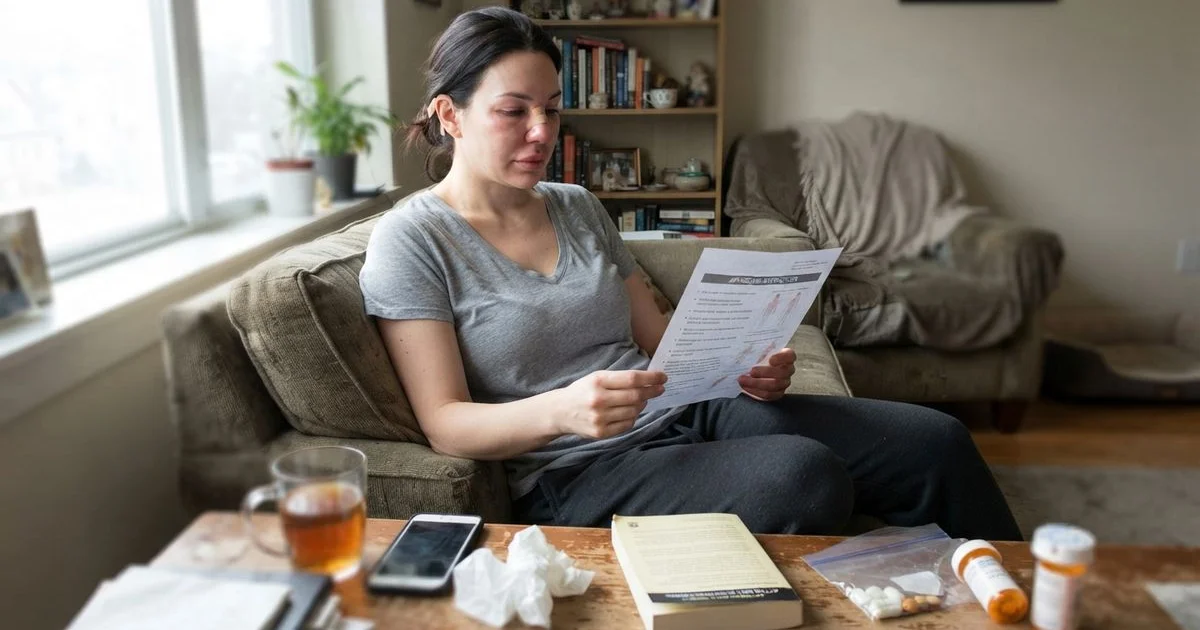
Recovery from any surgery involves discomfort that is expected and, separately, symptoms that are not. Knowing the difference in advance means you are not trying to figure it out for the first time while anxious and in pain.
Normal recovery versus symptoms that need a call
| Normal, expected | Call your surgeon |
|---|---|
| Swelling that peaks in the first few days, then gradually improves | Swelling that keeps increasing or is dramatically worse on one side |
| Bruising that changes colour and fades over one to two weeks | Skin that turns dark, blistered, or feels unusually hard or cold |
| A tight, achy discomfort managed by prescribed pain medication | Pain that suddenly worsens or is not controlled by medication as prescribed |
| Mild, clear or slightly blood-tinged drainage in the first days | Drainage that turns yellow, green, or has a strong odour |
| A low-grade temperature in the first 24 to 48 hours | A fever that develops later, climbs higher, or does not improve |
| Some numbness or tingling near the incision | Sudden numbness, weakness, or loss of sensation in a wider area |
If something feels genuinely wrong to you, even if it does not match a symptom on a list exactly, trust that instinct enough to call. You know your own body better than any general guide can account for.
Why a fast response matters
Most complications caught early are far easier to manage than ones left for days. Something as simple as a small area of infection, treated promptly with antibiotics, can turn into a much bigger problem if it is left to spread. Many of the same complications are also preventable in the first place; the body contouring complication-risk guide covers what lowers your risk before surgery ever happens. This is one reason it is worth asking, during your consultation before surgery, exactly how to reach the surgical team after hours and what their typical response time looks like.
Keeping a simple recovery log
Taking a daily photo of the surgical area and jotting a quick note on swelling, pain level, and how you are feeling makes it much easier to spot a genuine change versus normal day-to-day fluctuation. Without a record, it is easy to lose track of whether something is actually getting worse or just feels that way because you are looking at it more closely than usual. A short log also gives your surgeon something concrete to review if you do call with a concern, rather than relying on memory alone.
If you cannot reach your surgeon’s office
Persistence matters here. Call back, follow up by email so there is a written record, and if symptoms are worsening and you cannot get through, go to an emergency department rather than waiting. Bring your surgery details, the surgeon’s name, and, if possible, a photo of the area from a day or two earlier for comparison. Emergency staff can treat urgent complications even if they were not the ones who performed your surgery.
Setting yourself up for a smoother recovery
Ask your surgeon before surgery: what is considered normal for the first week, what is not, and how to reach the office (and after-hours coverage) if something concerns you. Get this in writing if you can. Knowing what to expect, and exactly who to call, removes a lot of the uncertainty that makes early recovery stressful.
You can browse and compare surgeons across Ontario on the directory home page, where every listing is reviewed under the same scoring methodology, including how surgeons and clinics are described in patient feedback around follow-up and communication.
When to go straight to emergency care instead of calling first
Some symptoms are urgent enough that waiting for a callback is the wrong move: severe shortness of breath, chest pain, sudden swelling and pain in one leg, fainting, or heavy uncontrolled bleeding all warrant going directly to an emergency department. Bring your surgery details and surgeon’s name if you can, but do not delay care to track that information down first. Emergency staff can begin treatment immediately and reach your surgical team afterward if needed.
This is general information, not medical advice, and is not a substitute for professional evaluation. If you are experiencing a medical emergency, seek immediate care rather than relying on this guide.
Questions people ask
- Is a fever after surgery always a sign of infection?
- A low-grade fever in the first day or two can be a normal response to surgery. A fever that develops later, climbs higher, or comes with increasing redness or drainage at the incision is different and worth calling about promptly.
- How much swelling is too much?
- Swelling that increases steadily rather than gradually improving, or that is dramatically worse on one side than the other, is worth flagging. Gradual swelling that peaks in the first few days and then slowly improves is typical.
- My surgeon's office was slow to respond when I called with a concern. What should I do?
- Follow up in writing so there is a record, and if you are genuinely worried and cannot reach anyone, go to an emergency department. Do not wait on a callback if symptoms are getting worse.
- Is it normal to feel emotionally low during recovery?
- Yes, a temporary low mood or regret in the first week or two is common and usually passes as swelling goes down and results become more visible. Persistent, worsening low mood is worth mentioning to your surgeon or your family doctor.